
2026
Spacia
Entrant
Ziwei Deng, Junyue Hua, Shixiao Wang
Category
Apps & Softwares - Lifestyle
Client's Name
N/A
Country / Region
United States
Spacia is an AI-powered spatial analysis and layout design platform that introduces spatial intelligence into everyday living environments. While most AI interior design tools focus on aesthetics or decoration, Spacia addresses a deeper problem: people often live in spaces that are inefficient, unsafe, or misaligned with their daily needs—yet these issues remain invisible due to long-term habituation. As urban living spaces become smaller and more constrained, improving how space functions is increasingly critical to quality of life.
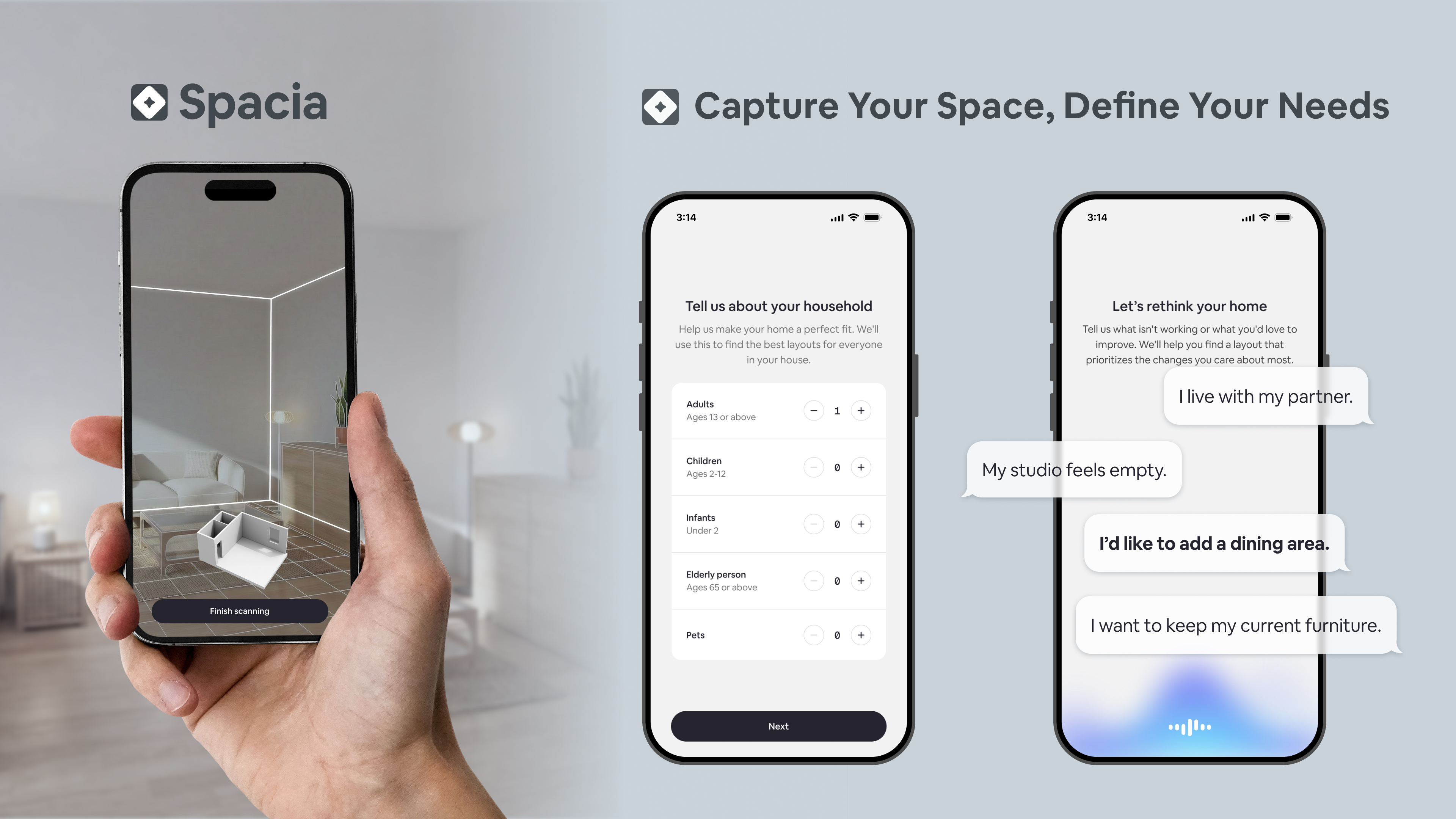
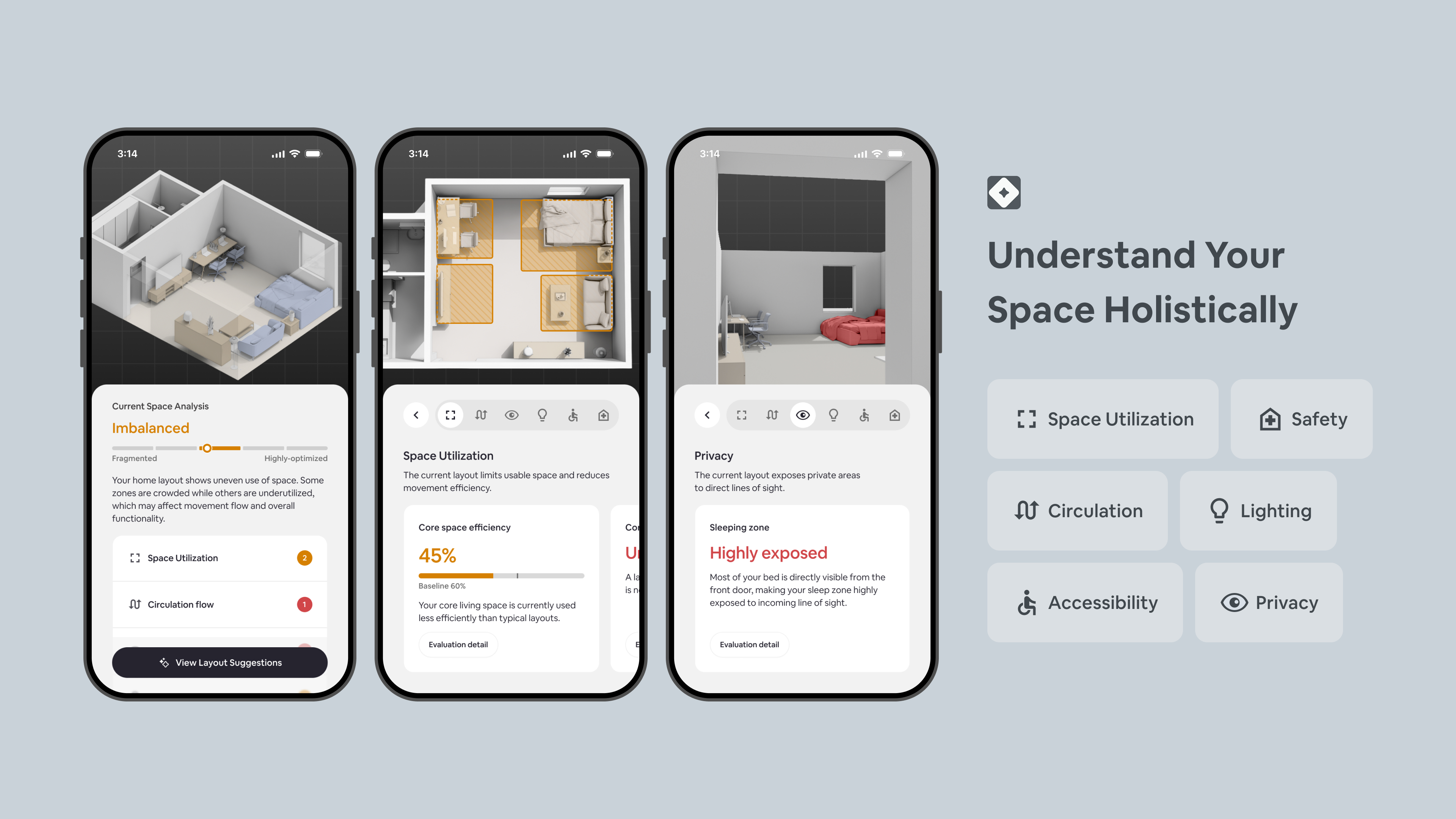
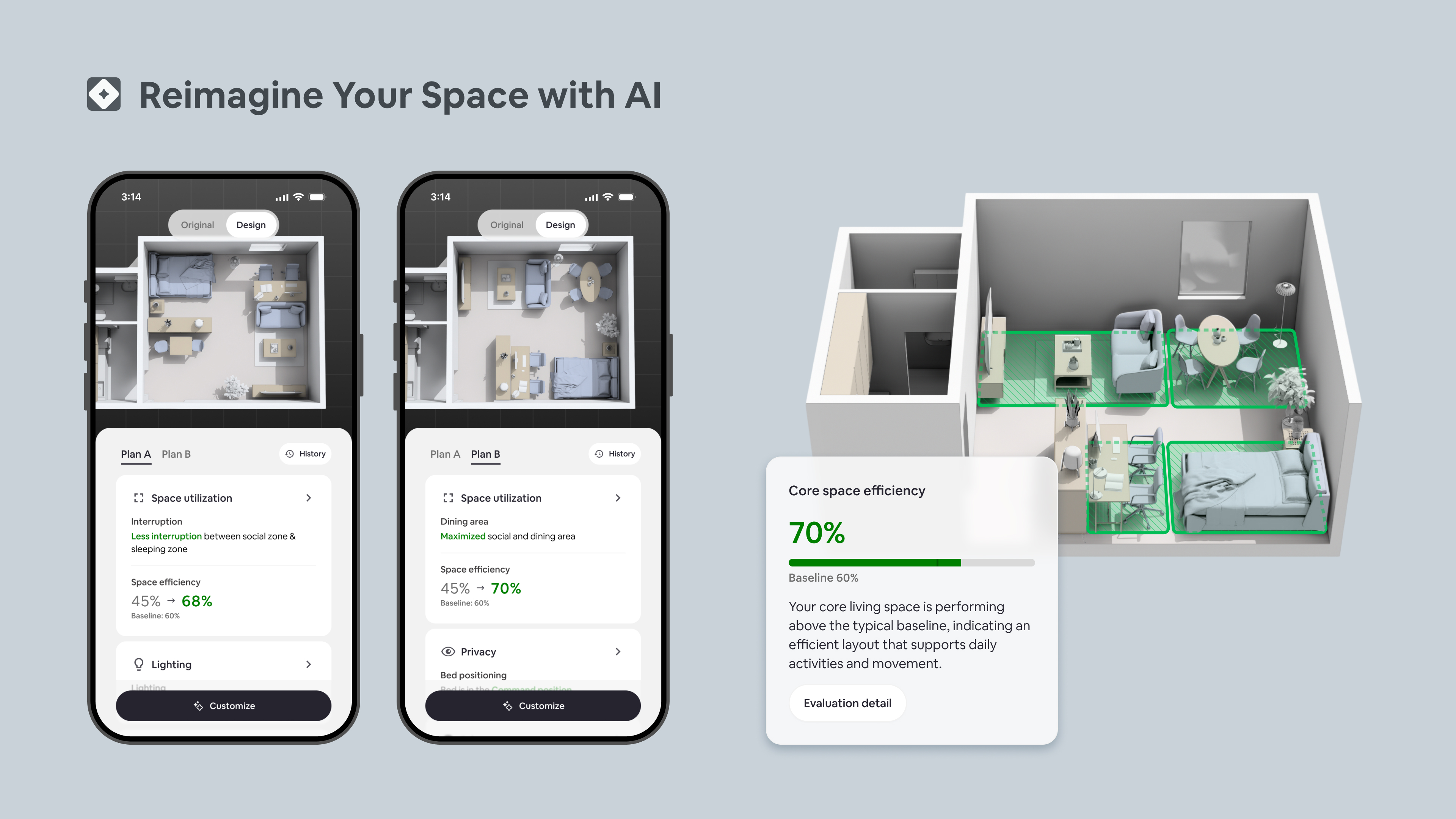
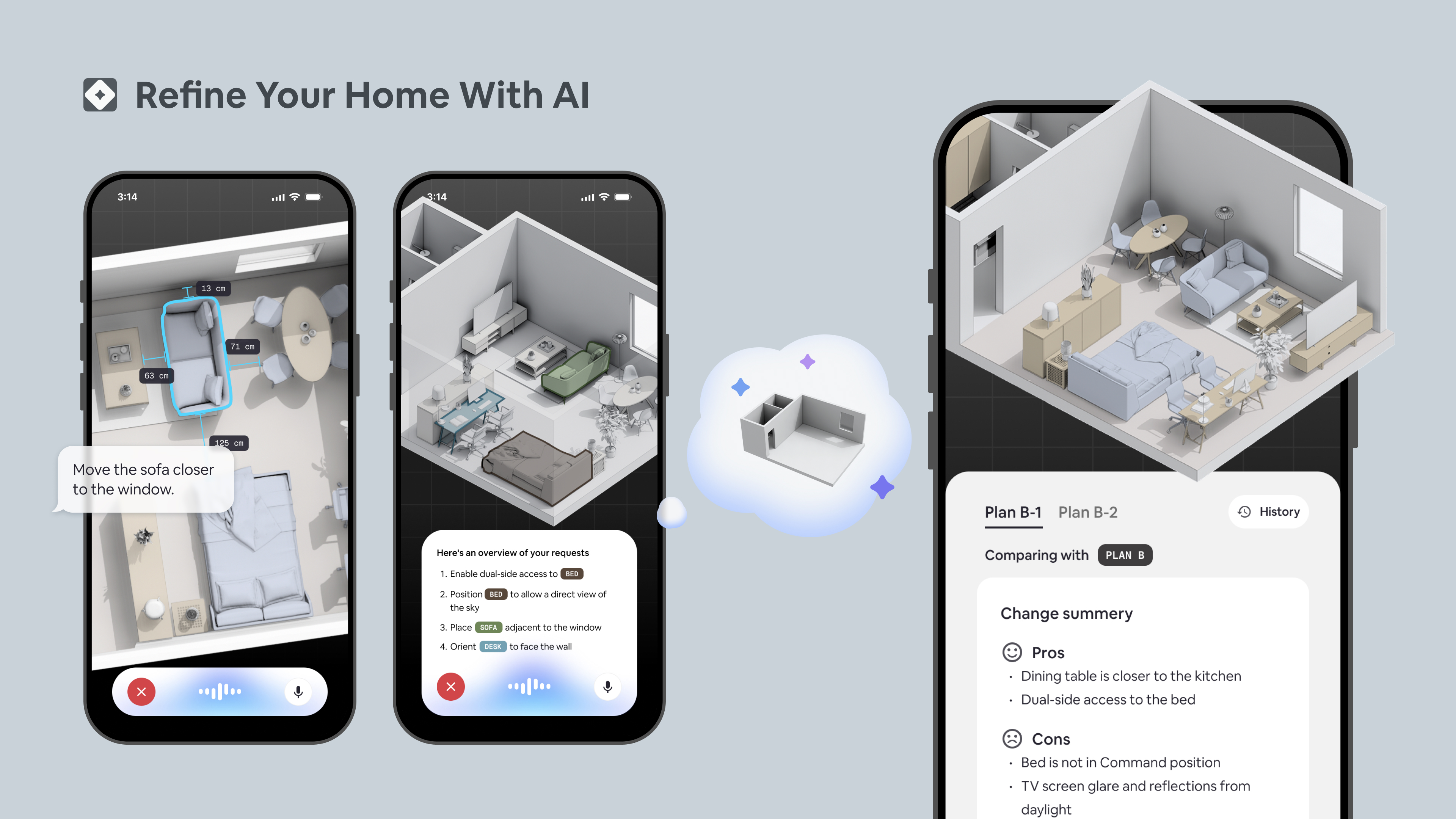
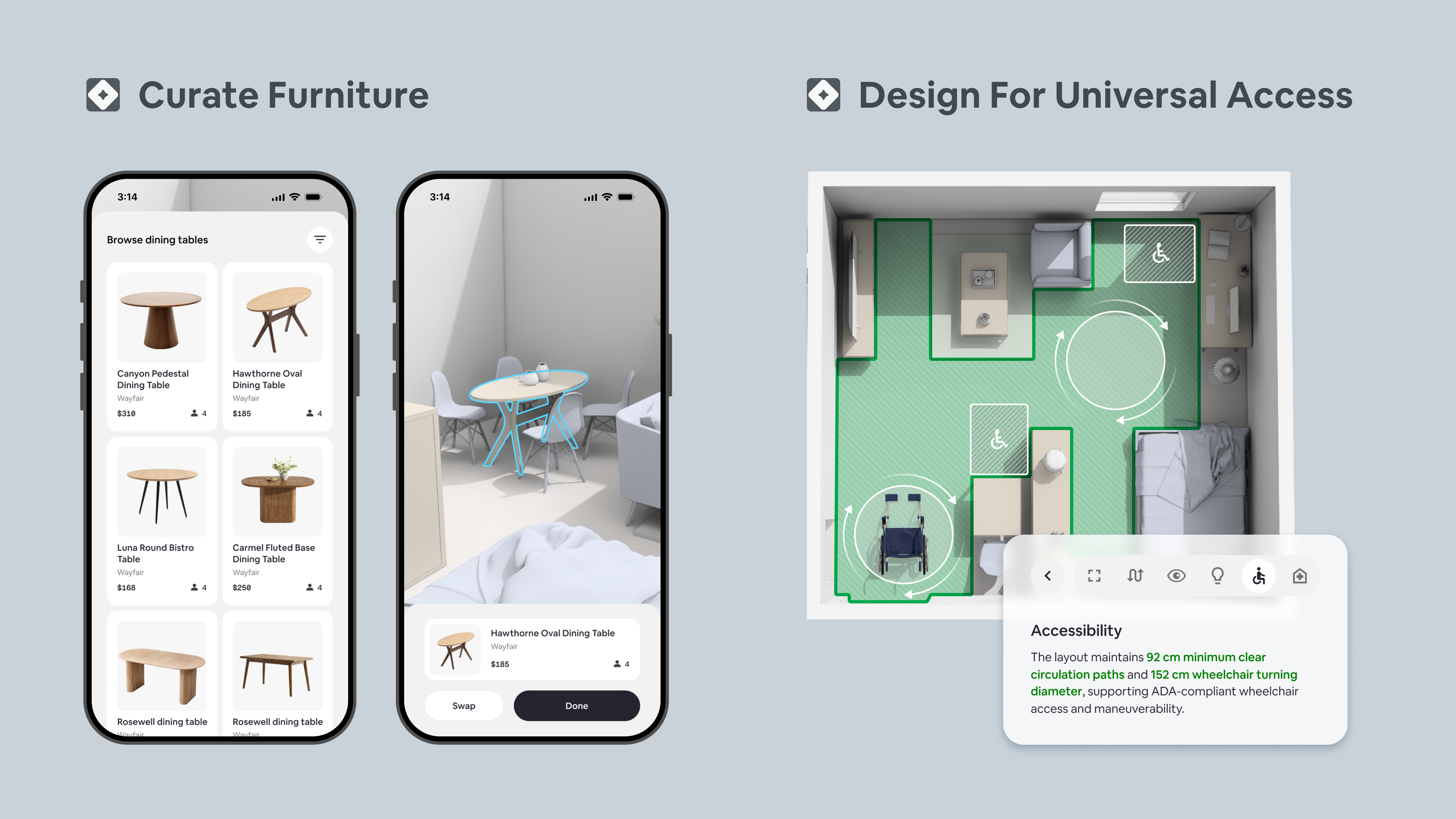
Spacia tackles this challenge by transforming smartphones into spatial advisors. Using a mobile camera, users scan their homes to generate a digital spatial model. The system evaluates the environment through a structured Six-Dimensional Spatial Analysis Framework—covering space utilization, circulation, privacy, lighting, safety, and accessibility—and translates complex spatial conditions into clear, actionable insights. Based on this, the platform generates optimized layout solutions that users can compare, iterate, and refine through a conversational human-AI interaction model.
The platform delivers meaningful benefits across physical and mental well-being. By identifying hidden spatial friction, it improves daily efficiency, comfort, and cognitive clarity. For older adults and individuals with disabilities, it acts as a proactive safety layer—detecting risks such as fall hazards or constrained mobility zones and suggesting adjustments that support independence and dignity.
At a societal level, Spacia democratizes access to professional spatial design intelligence, making it available to a broader population beyond those who can afford traditional design services. It also promotes sustainable urban living by helping users optimize existing spaces rather than relying on relocation or new construction.
Technically, Spacia combines smartphone-based spatial scanning with AI-driven spatial reasoning. A unified evaluation system allows users to compare original layouts, AI-generated solutions, and user-modified versions—clearly revealing trade-offs and improvements.
The visual design is intentionally minimal, using a neutral palette to reduce distraction and emphasize spatial relationships. Selective color coding and simplified 3D models guide users’ attention to functional insights rather than aesthetics.
By shifting digital home design from inspiration to intelligence, Spacia delivers a cohesive, accessible, and impactful experience—redefining how people understand and improve the spaces they live in.
Credits

Entrant
Laura Becker
Category
Design and Creativity - Ad Design
Country / Region
United States

Entrant
C² Technologies, Inc.
Category
Video / Online Video - Training
Country / Region
United States

Entrant
Laura Becker
Category
Design and Creativity - Student Design
Country / Region
United States
Entrant
Dreambridge B.V.
Category
Strategy & Marketing - Experimental / Innovative
Country / Region
Netherlands