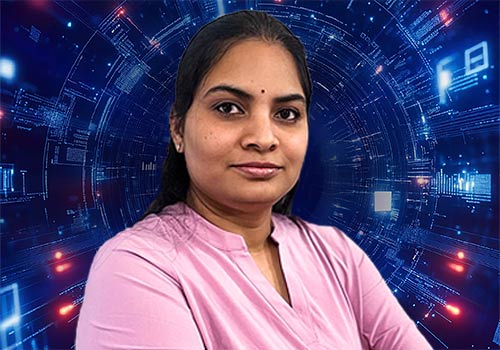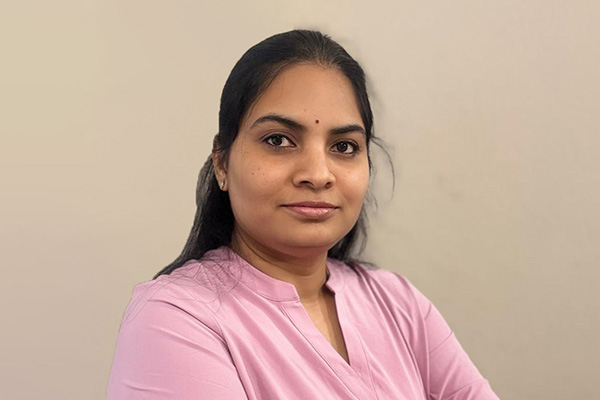
Swetha Lakkaraju
1. Congratulations on your achievements in the NY Digital! Could you start by introducing yourself or your agency? Can you also share a bit about your journey into your current industry?
I’m Swetha Lakkaraju, a Financial Conversion & Integration Professional specializing in core banking modernization and large-scale system transformations within the financial services industry. Over the years, I’ve had the opportunity to lead high-impact initiatives for global institutions such as Citibank and Bank of Montreal, focusing on Systematics-based applications, portfolio migrations, and automation-driven operational enhancements. My work centers on bridging complex technical architectures with strategic business objectives to ensure reliability, scalability, and measurable performance improvements in mission-critical banking environments. My journey into this industry began with a strong foundation in technology and a deep interest in how financial systems power global economies. Early in my career, I gravitated toward banking technology because of its unique blend of precision, regulatory rigor, and real-world impact. What drew me in—and continues to inspire me—is the challenge of modernizing legacy platforms without disrupting live financial operations. Over time, I transitioned into leadership roles where I not only design and implement solutions but also drive strategic transformation, mentor teams, and shape long-term system resilience. The evolving landscape of fintech and digital banking continues to inspire me to innovate while maintaining the uncompromising reliability that financial institutions demand.
2. What inspired you to submit your work for this competition, and what does winning mean to you personally and professionally?
I was inspired to submit my work because core banking transformation is often invisible to the public, yet it powers every digital interaction customers have with their banks. The initiatives I led at Citibank and BMO were not merely technical upgrades—they were high-stakes, large-scale transformations executed with precision and zero disruption. I felt these efforts embodied the kind of innovation that deserves broader recognition. Winning a Silver Award is both humbling and validating. On a personal level, it affirms years of dedication to solving complex problems in mission-critical environments. Professionally, it reinforces the value of combining strategic vision, automation, and operational discipline to modernize legacy banking systems without compromising reliability.
3. Can you share the story behind your success? What inspired its creation, and what do you feel it represents in today’s industry?
The foundation of this success was built on a simple yet powerful objective: transforming legacy banking systems without disrupting live operations. During the Citibank modernization and the BMO portfolio conversion, we managed highly sensitive financial data, large customer volumes, and strict regulatory constraints. The driving insight was recognizing that modernization does not have to come at the expense of stability. In today’s industry, this work represents a broader shift toward resilient digital transformation—where automation, structured deployment strategies, and batch optimization enable financial institutions to innovate with confidence while maintaining 99.9% uptime and operational continuity.
4. What do you believe set your project apart in such a competitive field? Were there specific elements or strategies that made it shine?
What set this project apart in a highly competitive field was its ability to deliver transformation without disruption. In core banking, innovation often carries operational risk—but this initiative proved that modernization and stability can coexist. By implementing phased deployments, parallel validations, automated batch monitoring, and structured reconciliation checkpoints, we achieved near-zero unplanned outages and maintained 99.9% uptime during critical conversion phases. The measurable impact—reducing manual testing by up to 70% and incident intervention by 60%—demonstrated that these were not incremental improvements, but operational breakthroughs. Another key differentiator was the holistic approach. Rather than focusing solely on technical upgrades, the project aligned architecture, automation, regulatory compliance, and business continuity within a unified strategy. It wasn’t simply about migrating systems—it was about redefining reliability standards in large-scale financial conversions. That balance of precision, innovation, and measurable business value is what truly set the project apart.
5. Every project has its challenges. Can you share a significant obstacle you faced during this process and how you overcame it?
One of the most complex challenges was executing a high-volume portfolio conversion from Bank of the West to BMO while maintaining stability across live Systematics applications. The scale involved debit and credit card as well as mortgage loan migrations, all under strict regulatory and time constraints. The potential for data inconsistencies or downtime required meticulous planning and rigorous execution. To address this, I implemented phased cutovers, parallel data validation processes, and automated reconciliation checkpoints across environments. Enhanced batch monitoring and rollback strategies were integrated into the execution plan, ensuring that every conversion step was measurable, validated, and tightly controlled. This structured approach significantly minimized risk and ensured a seamless transition.
6. Winning an award of this caliber often brings recognition. What do you hope this achievement will mean for your career, your team, or your agency in the long run? Have you already noticed any changes or opportunities arising from this recognition?
Winning this award reinforces the critical role of backend innovation in digital banking transformation. I hope it strengthens my position as a trusted leader in financial system modernization and highlights the value of disciplined execution in high-risk environments. For my teams, it serves as validation that operational excellence and automation-driven innovation truly matter on a global stage. Already, this recognition has sparked conversations around strategic advisory roles and larger-scale modernization initiatives. It has expanded visibility beyond immediate projects and created opportunities to contribute at a broader transformation level.
7. What has the reaction been from clients, audiences, or stakeholders about your winning entry? Any feedback or memorable moments that stand out?
The reaction from stakeholders has been overwhelmingly positive. Many expressed appreciation that mission-critical backend transformation—often invisible to customers—received industry-level recognition. Senior leaders noted that the award validated the strategic importance of reliability, automation, and precision in digital banking. One particularly memorable moment was hearing the work described as “invisible excellence”—the kind that ensures seamless customer experiences without drawing attention to itself unless something goes wrong.
8. For those aspiring to achieve similar success, what advice would you offer to help them not only thrive in their industries but also craft compelling, award-worthy entries? Are there specific practices, mindsets, or strategies you believe are key?
Focus on outcomes that deliver measurable impact. Understand the business implications of your technical decisions and consistently quantify results—whether through uptime improvements, cost optimization, efficiency gains, or risk reduction. Strong documentation and clarity of vision are essential when crafting award-worthy entries. Equally important are resilience and continuous learning. Complex projects demand structured thinking, stakeholder alignment, and adaptability. Excellence is rarely accidental—it is built through preparation, discipline, and accountability.
9. The creative industry is constantly evolving. How do you view these changes, and where do you hope to position yourself in the future?
The financial technology landscape is rapidly evolving through AI-driven automation, real-time processing, and cloud-native modernization. Yet legacy systems continue to form the backbone of many institutions. The true challenge lies in integrating innovation without compromising reliability. I aim to position myself at the intersection of automation, resilience, and large-scale digital transformation—helping institutions modernize responsibly while sustaining operational excellence.
10. Entering awards can be daunting for many, especially those just starting out. What would you say to individuals who have limited experience, or are hesitant to showcase their work in competitions? How can they build confidence and see the value in participating?
Many professionals underestimate the value of their contributions, particularly when their work takes place behind the scenes. Awards are not just about visibility—they are about reflection and storytelling. If your work delivers measurable impact, it deserves recognition. Start by documenting your results and clearly articulating the challenge, strategy, and outcome. Participation itself builds confidence and strengthens your industry presence, regardless of the final result.
11. Creativity thrives on community. What message would you like to share with fellow creatives, marketers, and advertising professionals?
Innovation thrives when we share knowledge and collectively elevate standards. Whether in fintech or creative industries, the goal should always be sustainable impact guided by ethical responsibility. Collaboration, mentorship, and continuous learning strengthen the ecosystem as a whole. True creativity is not only about generating new ideas—it is about building solutions that endure under pressure and deliver consistent, long-term value.
12. Winning is a team effort in many cases. Is there someone or a group of people you’d like to dedicate this achievement to, and why?
This achievement is dedicated to the cross-functional teams who worked tirelessly through critical weekend deployments, high-pressure conversion windows, and rigorous testing cycles. From developers and QA analysts to infrastructure teams and business stakeholders, their collaboration made flawless execution possible. Large-scale transformations are never individual accomplishments—they are built on trust, communication, and shared accountability.
13. If you could describe your award-winning entry in one sentence, what would it be and why?
A zero-disruption, automation-driven transformation that modernized legacy core banking systems into resilient, high-performance digital platforms.
14. Finally, what’s next for you? Any exciting projects or upcoming goals that you’d like to share with us and the audience?
Looking ahead, I am focused on leading larger digital transformation initiatives that integrate AI-enhanced monitoring, intelligent automation, and scalable architecture within core banking ecosystems. My goal is to continue redefining reliability standards while mentoring the next generation of leaders in financial technology. The journey continues toward building smarter, more agile, and resilient financial infrastructures that support the future of digital banking.